 A comprehensive overview of complementary and alternative medicine (CAM) treatments for mental health, with information and research on their effectiveness for treating specific disorders.
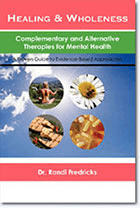 Twenty-two chapters and 650+ pages document research and psychology books and the current practice of using complementary and alternative therapies in treating a number of disorders, including depression, anxiety, ADHD, autism, and addictions. This book is used as a textbook for medical and mental health professionals.
The therapies covered are both state-of-the-art and ancient, including naturopathy, psychotherapy, hypnotherapy, nutritional therapy, herbal medicine, meditation, and other CAM therapies. The information is based on research and Dr. Fredricks’ therapist practice.
Healing & Wholeness: Complementary and Alternative Therapies for Mental Health may be conveniently purchased online at Amazon.com or purchased from San Jose and San Francisco area book stores.
Click here to purchase at Amazon
Fredricks, Randi. (2008). Healing & Wholeness: Complementary and Alternative Therapies for Mental Health. Bloomington, IN: Author House.
Learn more about the book:
Healing and Wholeness: Complementary and Alternative Therapies for Mental Health website